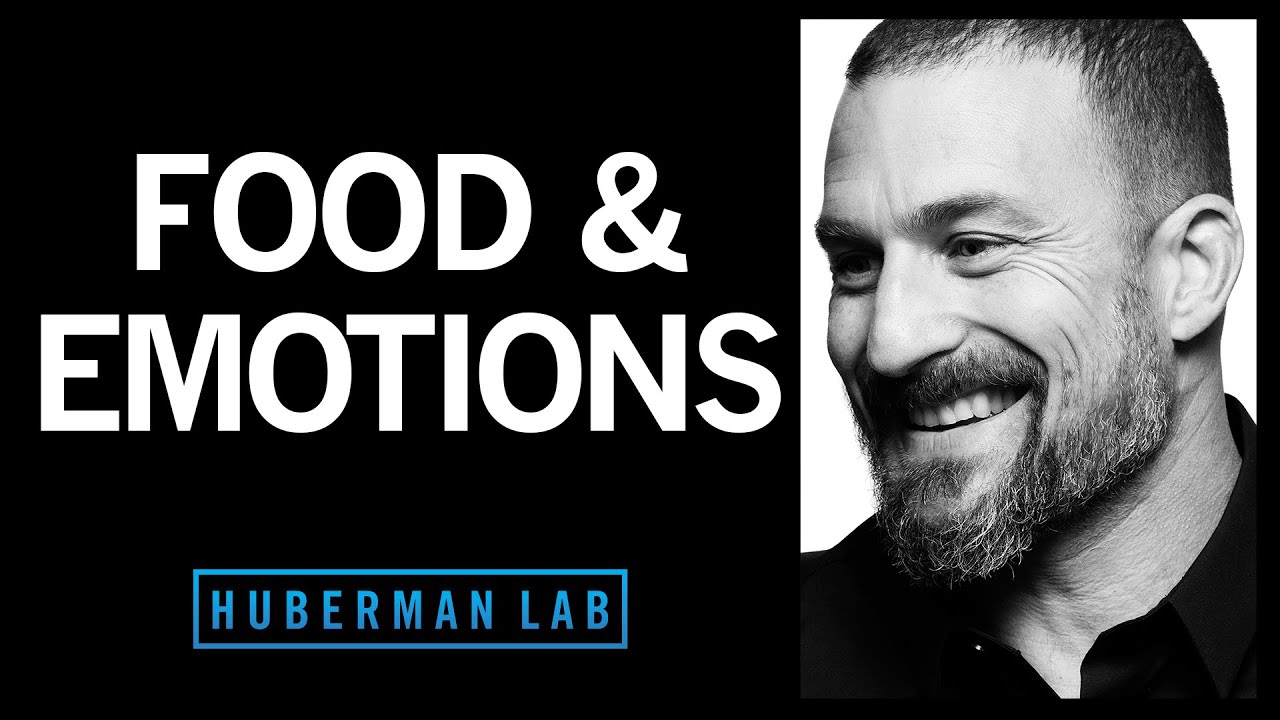
Andrew Huberman: Professor of neurobiology and ophthalmology at Stanford School of Medicine and host of the Huberman Lab podcast, which translates neuroscience into practical health tools.
What this episode covers
In this solo episode, Andrew Huberman breaks down how emotions arise from a constant brain-body conversation rather than from the head alone. He explains the vagus nerve, gut nutrient-sensing, and how amino acids from food become the neurochemicals dopamine and serotonin that drive craving, motivation, calm, and mood. He reviews evidence-based interventions including L-tyrosine, 5-HTP, mucuna pruriens, EPA fish oil, and L-carnitine, while debunking misconceptions about the vagus, serotonin in the gut, and artificial sweeteners. He closes with the gut microbiome and Alia Crum's mindset studies showing beliefs about food physically change the body.
Recommended on this episode
The Molecule of More
Daniel Z. Lieberman and Michael E. Long
“I don't know the author personally, but I love the book. It's called The Molecule of More. It's a terrific book.”— Andrew Huberman
How Emotions Are Made
Lisa Feldman Barrett
“I'm a huge fan of Lisa Feldman Barrett ... Her first book is How Emotions Are Made ... bought it, read it, loved it”— Andrew Huberman
EPA fish oil
“A couple years later I did in fact start taking 1,000 mg per day of EPA in fish oil ... I just felt better.”— Andrew Huberman
Also referenced (named, not recommended)
L-Tyrosine
“full disclosure, I sometimes take L-Tyrosine. I'm not taking it right now, but I take it only occasionally. You can buy this in capsule form.”— Andrew Huberman
Wellbutrin (bupropion)
GlaxoSmithKline
“Certain antidepressants fall into the category of dopaminergic antidepressants. One of the most famous ones, of course, is Wellbutrin.”— Andrew Huberman
5-HTP supplements
“Some people also will take serotonin. They You can now buy 5-HTP supplements. This is a little bit tricky.”— Andrew Huberman
Mucuna pruriens
“if you're interested in the dopamine pathway, go to examine.com, put in Mucuna pruriens ... Inside the bean is L-dopa.”— Andrew Huberman
Prozac (fluoxetine)
Eli Lilly
“there was this explosion in the number of prescription drugs ... first one and most famous one is Prozac, Zoloft, and Paxil”— Andrew Huberman
Krill oil
“There's krill oil. Krill is still an organism ... Some people really like krill oil as a source of omega-3s.”— Andrew Huberman
L-Carnitine (Acetyl-L-Carnitine)
“The next one I want to mention cuz I think it's really interesting is L-carnitine ... L-carnitine actually has some really impressive effects on depression.”— Andrew Huberman
Big reveals from this episode
- Hidden sugars work subconsciously: gut sensors make you crave sugary food even when your mouth is numbed and you cannot taste the sweetness.
- Despite the popular claim that 90% of serotonin is in the gut, the serotonin that actually controls mood lives in the brain's raphe nucleus, not the gut.
- A double-blind study found 1,000 mg of EPA was as effective as 20 mg of Prozac at reducing depression, and combined they were synergistic.
- 'Stimulating the vagus' is a terrible framing; the vagus also drives fever responses, so generic stimulation is not what you want.
- The widely cited Nature study on artificial sweeteners harming the microbiome was only about saccharin, not aspartame, sucralose, stevia, or monk fruit.
- Alia Crum's milkshake study: identical shakes blunted hunger hormone ghrelin differently based purely on whether subjects believed it was high or low calorie.
- Hotel housekeepers told their work counted as exercise lost body fat and lowered blood pressure 8 weeks later despite no change in actual activity.
- Multi-day fasting significantly depletes the gut microbiome, which may explain why people feel worse when they resume eating after a long fast.
Worth remembering
- Approaching a meal triggers locus coeruleus to release noradrenaline, creating a pre-meal alertness many people experience as anxiety.
- Dopamine is the molecule of wanting and desire, not just reward; reward prediction error means hyped-up expectations can make experiences less satisfying.
- L-tyrosine, found in meats, nuts, and some plants, is the dietary precursor the body uses to build dopamine.
- Mucuna pruriens is a velvet bean coated in skin-irritating serotonin on the outside while containing L-dopa, a dopamine precursor, inside.
- Carbohydrate-rich foods raise serotonin via tryptophan, which is why Huberman eats starchy carbs in the evening to aid sleep.
- The cardiovascular benefit of omega-3s appears to work largely by increasing heart rate variability via the autonomic nervous system.
- The brain, ovaries, and testes are the only organs nature protects with a dedicated barrier (blood-brain and blood-gonadal barriers).
- More probiotic is not better; overloading on lactobacillus can cause brain fog, while two daily servings of fermented foods is ideal.
- Wellbutrin was developed as a dopaminergic antidepressant to avoid the lethargy side effects of serotonin-based drugs.
- L-carnitine increases sperm motility and pregnancy rates and has shown notable reductions in depression, autism symptoms, and migraine frequency.