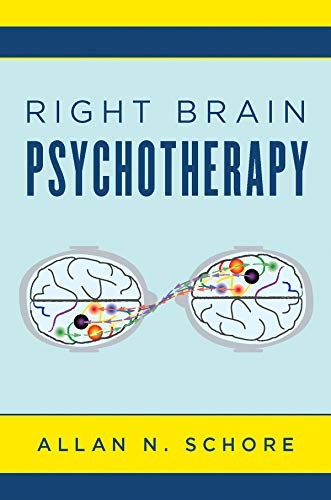
Book · recommended on 3 episodes
Right Brain Psychotherapy
Allan Schore ISBN 9780393712858
Find it on AmazonAffiliate link — we may earn a commission at no extra cost to you.
Allan Schore ISBN 9780393712858
Find it on AmazonAffiliate link — we may earn a commission at no extra cost to you.
This book by Allan Schore has come up 3 times on Andrew Huberman. 2 of those mentions were genuine on-air recommendations, not just passing references. The people who brought it up: Allan Schore, Andrew Huberman. The earliest mention we indexed is from 2021-12-20 and the most recent from 2024-11-11. Every occurrence below links to the episode page and to the exact second it was said on YouTube.
“he is also the author of several important books including right brain Psychotherapy and development of the unconscious mind”— Allan Schore
The guest here is Dr. Allan Schore: Clinician, psychoanalyst, and faculty member in the Department of Psychiatry and Behavioral Sciences at UCLA. A world expert on regulation theory and how early childhood attachment shapes the developing brain, and author of foundational books including Right Brain Psychotherapy. Neuroscientist Allan Schore explains how the right brain, shaped in the first two years of life, governs attachment and adult relationships.
“He has a wonderful book called "Right Brain Psychotherapy." It's a little bit technical, but if you're interested in some of the studies”— Andrew Huberman
The guest here is Andrew Huberman: Professor of neurobiology and ophthalmology at Stanford School of Medicine and host of the Huberman Lab Podcast. This is a solo episode with no outside guest. Andrew Huberman breaks down the neuroscience of desire, love, and attachment, framing all three as products of autonomic nervous system coordination.
“He also has a book it's called "Right Brain Psychotherapy." And it's an excellent book, it's actually pretty accessible”— Andrew Huberman
The guest here is Andrew Huberman: Professor of neurobiology and ophthalmology at Stanford School of Medicine and host of the Huberman Lab Podcast, which translates neuroscience into actionable everyday tools. Huberman breaks down the single dopamine-and-oxytocin circuit behind all social bonds and how to deepen them through shared physiology.
 26× recommended
Tom O'Neill
 17× recommended
Steven Pressfield
 17× recommended
S.C. Gwynne
 16× recommended
Marcus Aurelius
 16× recommended
Viktor Frankl
 15× recommended
Brian Muraresku