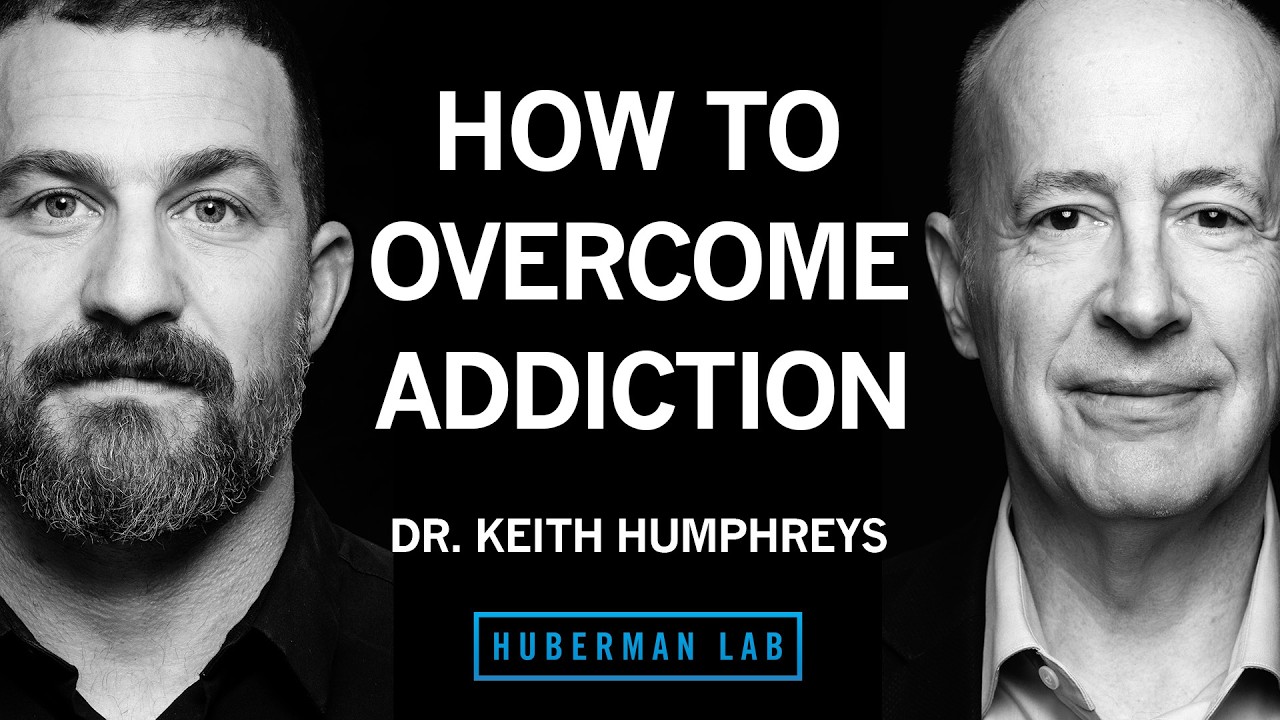
Dr. Keith Humphreys: Professor of psychiatry and behavioral sciences at Stanford School of Medicine and one of the world's foremost experts on addictive substances and behaviors. He has advised addiction policy under both Republican and Democratic administrations and worked a decade as a hospice counselor.
What this episode covers
Andrew Huberman and Dr. Keith Humphreys cover the full landscape of addiction, from genetics and the brain's reward circuitry to alcohol, cannabis, gambling, stimulants, nicotine, opioids, psychedelics, and behavioral addictions like social media and gambling. Humphreys defines addiction as persisting in a harmful behavior to the point of self-destruction and stresses that genes are risk, not destiny. He debunks the idea that moderate drinking is healthy, details how industries deliberately engineer addiction for profit, and reviews what actually works for recovery, including contingency management, RTMS, GLP-1 drugs, and 12-step programs. The conversation closes with reflections on death, drawn from his hospice work, and practical advice for parents and young people.
Recommended on this episode
Addiction by Design: Machine Gambling in Las Vegas
Natasha Dow Schull
“There's a tremendous book Addiction by Design... about gambling and she profiles people who play video poker, many of whom work in the casino.”— Keith Humphreys
Dopamine Nation
Anna Lembke
“giving them Anna's book, Dopamine Nation, and obviously really hard work on their part is really what did it.”— Andrew Huberman
Also referenced (named, not recommended)
The Comfort Crisis
Michael Easter
“he wrote the comfort crisis about getting outdoors, getting away from things and basically carrying weight on your back and walking as a therapy of sorts.”— Andrew Huberman
Adderall
Teva
“What about all the prescription stimulants, Adderall, Viviance? I feel very lucky that those didn't exist when I was in high school.”— Andrew Huberman
Vyvanse
Takeda
“What about all the prescription stimulants, Adderall, Viviance? I feel very lucky that those didn't exist.”— Andrew Huberman
Nicorette
Haleon
“nicotine is protective against Parkinson's and Alzheimer's, which is why he chews or did chew tons of nicarette per day.”— Andrew Huberman
Ozempic
Novo Nordisk
“simaglletide which is the GLP that is in uh wave and uh ompic and alcohol uh drops in alcohol use”— Keith Humphreys
Wegovy
Novo Nordisk
“simaglletide which is the GLP that is in uh wave and uh ompic and alcohol uh drops in alcohol use”— Keith Humphreys
Big reveals from this episode
- Humphreys says roughly 10% of Americans drink about half of all the alcohol consumed, so the industry profits most from heavy/addicted users.
- He flatly states that despite the red wine myth, alcohol is not healthy and any cardiac benefit is smaller than the cancer risk.
- Reveals the alcohol industry deliberately engineered 'mommy wine' culture to increase women's drinking, even faking organic-looking online communities.
- Modern cannabis delivers about 65x the brain exposure of 1980s pot, the same potency gap as coca leaf vs. cocaine.
- Calls the lack of progress treating stimulant addiction the biggest disappointment of his career.
- A Cochrane review found Alcoholics Anonymous outperformed gold-standard therapies on abstinence, often by 50% higher rates, and is essentially free.
- Admits he went into hospice work for a decade partly to confront his own fear of death.
- Reveals he's working with the VA and Novo Nordisk to study GLP-1 drugs like semaglutide as a treatment for alcohol use disorder.
Worth remembering
- The single most useful predictor of alcohol risk is simply whether a parent was alcoholic, better than any genetic test.
- About 42% of cannabis users now use it daily or almost daily, versus once or twice a week in past decades.
- Casinos use 'LDWs' (losses disguised as wins) so players feel they're winning while their money drains away.
- Some video poker addicts jam the bet button down with a bent toothpick and watch dissociatively until their money is gone.
- Ketamine can give 25-year-olds '60-year-old bladders' from heavy use, a side effect urologists now routinely see.
- If you consumed all the nicotine in a carton of cigarettes at once, it would kill you.
- In one study, 91% of people seeking alcohol treatment said someone had pressured them to quit, showing external pressure usually drives change.
- Only two countries on Earth allow constant TV drug advertising: the United States and New Zealand.
- There is essentially no evidence that psilocybin or LSD are addictive; their abuse potential is extremely slight.
- Across nearly every culture, men consume more addictive substances and are over-represented in most major addictions; prescription medication misuse is closer to 50/50.