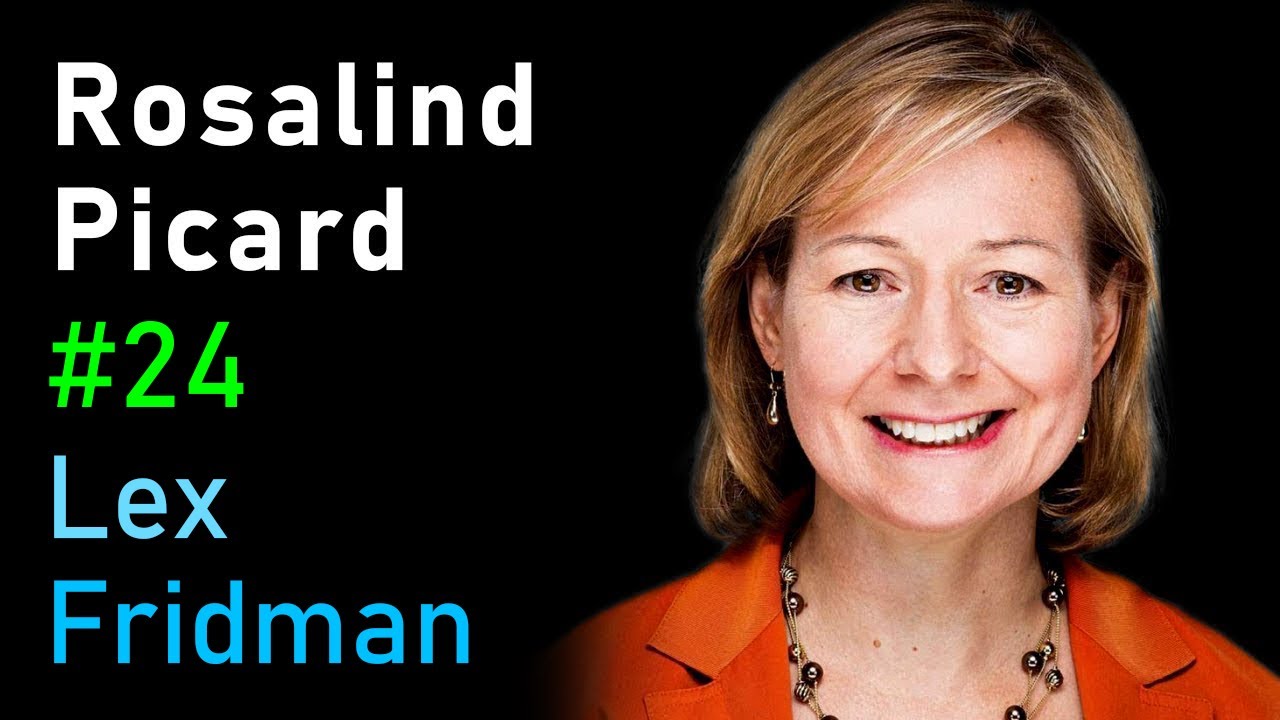
Rosalind Picard: MIT professor, director of the Affective Computing Research Group at the MIT Media Lab, co-founder of Affectiva and Empatica, and founder of the field of affective computing.
What this episode covers
Rosalind Picard discusses how she launched affective computing over 20 years ago and how the challenge of building emotionally intelligent machines remains as hard as she predicted. She raises serious concerns about emotion-recognition technology being used for surveillance and control, especially in authoritarian states, and argues for regulation protecting people's emotional and predictive health data. She explains how wearables and cameras can read physiological signals like stress and heart rate, and how her work led to a seizure-detecting wristband (Embrace) that is now FDA cleared. The conversation closes on consciousness, embodiment, and Picard's personal faith and views on the limits of science.
Recommended on this episode
Ender's Game
Orson Scott Card
“reading some science fiction books connecting with the character Orson Scott Card and you know just amazing writing and Ender's Game”— guest
Speaker for the Dead
Orson Scott Card
“speaker for the dead terrible title but those kind of books that pull you into a character and you feel like you're”— guest
The guest's own work
Affective Computing
Rosalind Picard
“over two decades ago she launched the field of affective computing with her book of the same name”— Lex Fridman
Also referenced (named, not recommended)
Her
Spike Jonze
“you can have a very deep connection much more than the movie her right you know plays up”— guest
Brave New World
Aldous Huxley
“well there was a book about that right the brave new world you know make everybody happy take your soma if you're unhappy”— guest
The Hitchhiker's Guide to the Galaxy
Douglas Adams
“I did everything was Douglas Adams yeah 42 my favorite number my street address my husband right”— guest
Big reveals from this episode
- Picard says she is deliberately putting the brakes on her own research due to how emotion-recognition tech is being used for control in places like China.
- Her team developed methods to extract heart rate and respiration from video, then also built ways to jam/fake those signals to protect against misuse.
- She argues people should own their own data and that lie-detector-style protections should be extended to emotion recognition, especially for jobs.
- A regular laptop or phone camera can read a 'neutral' face and detect racing heart, irregular breathing, and stress via invisible color changes.
- An unusual skin-conductance spike on one wrist in an autistic child led to discovering it was caused by abnormal brain electrical activity (seizures).
- The Embrace wristband became FDA cleared for seizure detection.
- Picard's team is mapping deep brain regions whose activity produces big skin-conductance responses, linked to dangerous post-seizure brain flattening (SUDEP).
Worth remembering
- Picard suggests Clippy would have been better received if it acted like a puppy putting its ears back when scolded, instead of smiling and dancing.
- People tell Siri every day that they want to kill themselves, and Apple wants to distinguish genuine suicidal intent from joking.
- Jen Lerner's research ('heartstrings and purse strings') shows manipulating someone into a sadder mood makes them pay more for things.
- Using only a wearable, Picard's models forecast tomorrow's stress, mood, and health with better than 80% accuracy.
- SUDEP (sudden unexpected death in epilepsy) is the number two cause of years of life lost among neurological disorders, after stroke.
- Picard found getting FDA clearance much harder than publishing multiple papers in top medical journals.
- Research shows happiness levels off around $75,000 of income, but helping others yields far more happiness than that money buys.
- Studies show an embodied robot is more engaging and memorable than a video of a robot or no robot at all.
- The Sophia robot was granted citizenship rights in Saudi Arabia, then boxed up and shipped to its next paid appearance.
- Picard and her husband chose the street address 42, the answer to life from Douglas Adams.