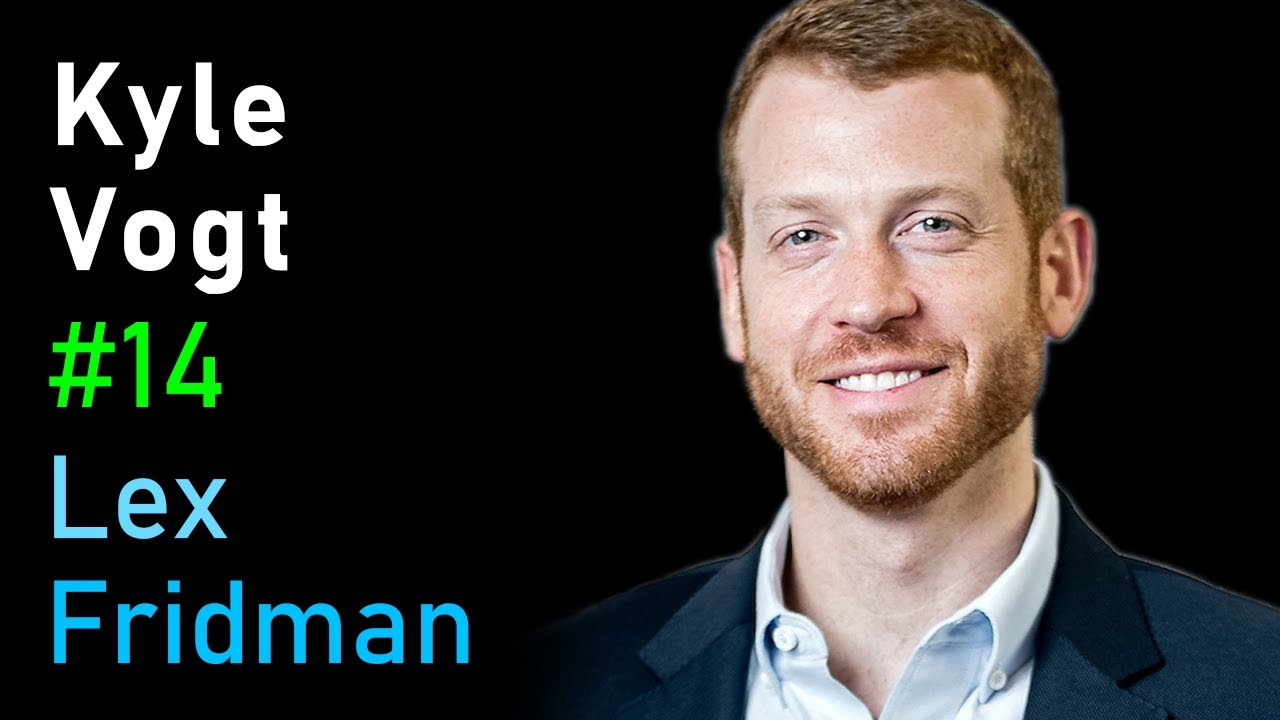
Kyle Vogt: President and CTO of Cruise Automation, co-founder of Twitch (Justin.tv) and Cruise, both acquired for around a billion dollars each.
What this episode covers
Kyle Vogt traces his journey from building Lego robots and BattleBots in Kansas, through MIT and the first DARPA Grand Challenge, to dropping out to co-found Justin.tv, which became Twitch. He explains how he set criteria for his next venture and landed on self-driving cars as the greatest applied AI problem of his generation, founding Cruise in 2013. He discusses abandoning the original highway-autopilot retrofit plan to go all-in on driverless cars, the culture clash and synergy between GM and Silicon Valley, and the economics of autonomous fleets. The conversation closes on the grind of moving from prototype to production and his prediction that hundreds of thousands of autonomous vehicles are less than five years away.
Also referenced (named, not recommended)
Lego Mindstorms
Lego
“you know Lego Mindstorms came out and for the first time you could program Lego contraptions and I think things just sort of snowballed from that”— Kyle Vogt
BattleBots
Comedy Central
“I remember seeing you know the battle bots TV show on Comedy Central and thinking that is the coolest thing in the world I want to be a part of that”— Kyle Vogt
Audi S4
Audi
“we started with an Audi s4 as the vehicle we retrofitted with his highway driving capability”— Kyle Vogt
Big reveals from this episode
- Vogt decided self-driving cars was a problem he could commit ten years to, calling it the greatest applied AI problem of his generation.
- Cruise had a working highway autopilot prototype after about a year but completely abandoned it to go all-in on fully driverless cars.
- Vogt has come full circle and now rejects the retrofit approach due to safety-critical validation and liability complexities.
- A key business-model problem: supporting San Francisco's market would require retrofitting 20 to 50 different vehicle models, each a custom maintenance burden.
- Vogt predicts hundreds of thousands of autonomous vehicles on the road in less than five years.
- 2019 is the year Cruise aims to cross the threshold to superhuman performance and launch its first commercial product.
Worth remembering
- Vogt obsessively read tens of thousands of BattleBots forum posts to learn how to build 200-pound fighting robots at age 13 or 14.
- BattleBots competitors ran $40 winch DC motors at double or triple rated voltage for the two-minute match before they burned out.
- The idea for self-driving cars came to Vogt during a mind-numbing 10-hour drive across western Kansas on his learner's permit.
- His first lane-keeping system ran on a 233 MHz Pentium computer, written in interpreted BASIC, far too slow for any deep learning.
- His MIT DARPA team's only steering motor died on qualifying day, leaving the vehicle dead in the water.
- Vogt joined founders who had previously sold a company on eBay for about a quarter million dollars.
- On Justin.tv's launch night, the streaming backpack used three or four cell phone modems to spray a single video stream across them.
- GM manufactures and sells over nine million cars a year.
- Aggressive driving like flooring it at green lights only saves about 30 seconds on a 15-minute trip.
- Vogt went through Y Combinator twice, valuing the competitive environment of highly motivated peers.