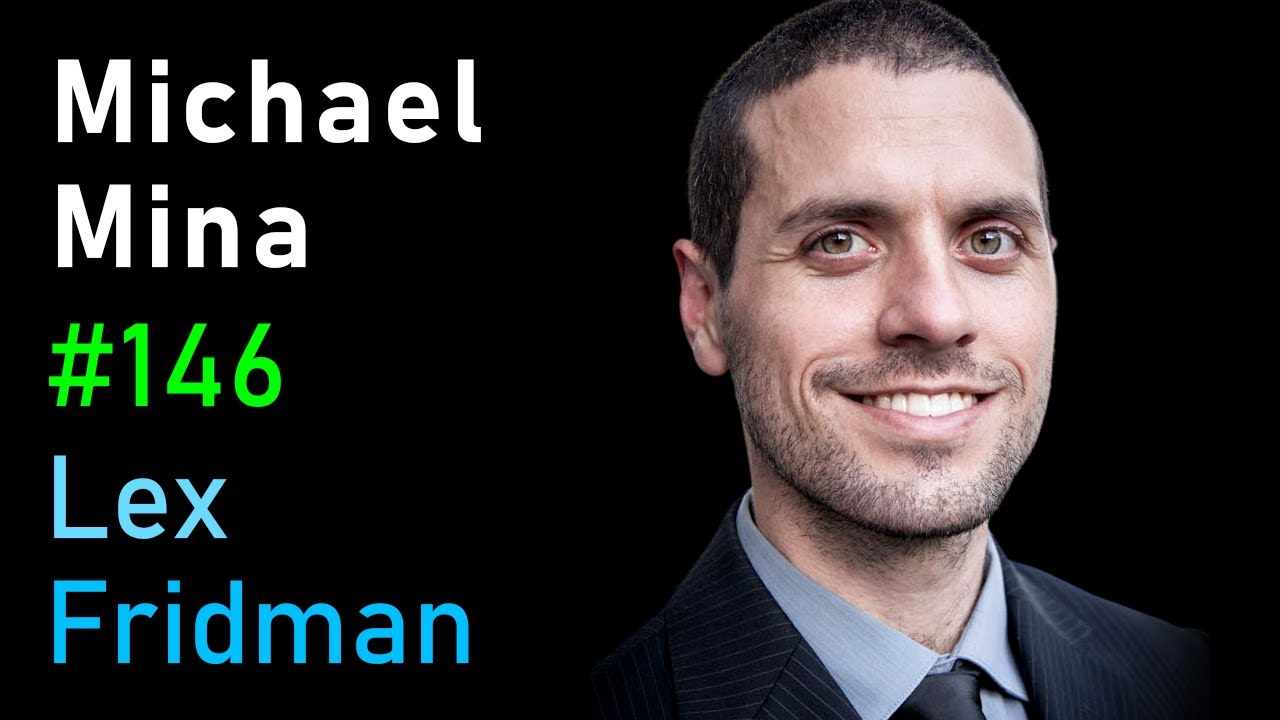
Michael Mina: A Harvard professor of epidemiology and immunology and medical director at Brigham and Women's Hospital, known as a first-principles engineer-scientist and the leading advocate for mass cheap rapid antigen testing during COVID-19.
What this episode covers
Michael Mina argues that cheap paper-strip rapid antigen tests, made by the tens of millions a day, could have stopped COVID-19 transmission by empowering people to know when they are infectious. He explains the difference between diagnostic sensitivity and contagiousness sensitivity, why PCR's lingering positives mislead policy, and how the FDA's framing of tests as medical devices rather than public health tools keeps them expensive and unavailable in the US. The conversation widens into his vision for a 'global immunological observatory' that maps viruses like weather, the unique immunological fingerprint that can identify even identical twins, the threat of engineered viruses, and finally his years as a Buddhist monk in Sri Lanka and reflections on meaning.
Recommended on this episode
Abbott BinaxNOW
Abbott
“this is uh this is abbott's binex now test and it's really it's pretty simple”— guest
Detect (rapid RNA detection device)
Detect (Jonathan Rothberg)
“this test here by a company called detect this is one of jonathan rothberg's companies”— guest
Also referenced (named, not recommended)
Quidel QuickVue
Quidel
“there's a few companies quadel is making a test called the quick view which is just just this”— guest
Ellume COVID-19 test
Ellume
“it's got like lights in it and a power button and stuff this is called an alum test which is you know fine”— guest
Innova rapid antigen test
Innova
“an american company based in california called inova and they are giving 5 million tests to the uk every day”— guest
SD Biosensor rapid antigen test
SD Biosensor
“sd biosensors one company's making tens of millions a day not coming to the united states but going all over europe”— guest
BD Veritor
Becton Dickinson
“he was using a slightly different one one of these but that requires an instrument called the bd veritar”— guest
23andMe
23andMe
“you can offer individuals something in return like 23andme does you know that's a great way to get people to give specimens”— guest
The Rise and Fall of the Third Reich
William L. Shirer
“i've been reading as i don't shut up about the the rise and fall of the third reich and you know there there's economic effects”— guest
The Matrix
The Wachowskis
“i always think of the matrix you know or where um i forget who it was somebody was shooting at neo and he like leans backwards”— guest
Big reveals from this episode
- Mina's research found measles wipes out children's immune memories, accounting for as much as half of all infectious-disease deaths in kids before vaccination.
- He swears on air out of frustration, saying he's 'just so fucking pissed that these tests don't exist.'
- The US government bought 150 million Abbott BinaxNOW tests at five dollars each, proving rapid tests can be cheap and mass-produced.
- Mina says Elon Musk could 'single-handedly' change the course of the pandemic by building rapid-test machines with his engineers.
- He reveals nobody owns the regulatory category: the FDA, CMS, and CDC each disclaim jurisdiction, leaving rapid tests in 'purgatory.'
- He can build a stable immunological 'barcode' that identifies a person from a blood drop, accurate enough to tell identical twins apart.
- Researchers are engineering immunity-evading measles as a cancer therapy, which Mina warns could be catastrophic if weaponized.
- The 2004 Indian Ocean tsunami killed 40,000 people near him and ended his time as a Buddhist monk, pushing him into public health.
Worth remembering
- Influenza cleaves sialic-acid receptors and bacteria 'piggyback' on the virus to cause severe secondary bacterial infections.
- A paper-strip rapid test costs under a dollar to make and can hit roughly 99% sensitivity and specificity for infectiousness.
- Lateral-flow antigen tests use the exact same technology as pregnancy tests, with printed antibodies pulling sample across a nitrocellulose membrane.
- PCR can stay positive for weeks like DNA at a crime scene long after a person is no longer contagious.
- At very low viral loads near the edge of infectiousness, rapid-test results become stochastic, explaining Musk's discrepant tests.
- Mina wants a virus 'weather system': open your phone, enter your zip code, and learn whether to grab a mask instead of an umbrella.
- Flu has segmented genomes allowing antigenic 'shift,' meaning a whole new virus can appear overnight, making it his top pandemic fear.
- Mina trained in engineering and physics, became a Buddhist monk, then medicine and immunology, calling his 'superpower' bringing it all together.
- In deep meditation he experienced drinking a glass of water as roughly 18 separate movements, like the world slowing into 'slow motion.'
- Mina describes humans as 'a bunch of pluses and minuses' or robots with complicated algorithms, a 'blip' that should make the most of it.