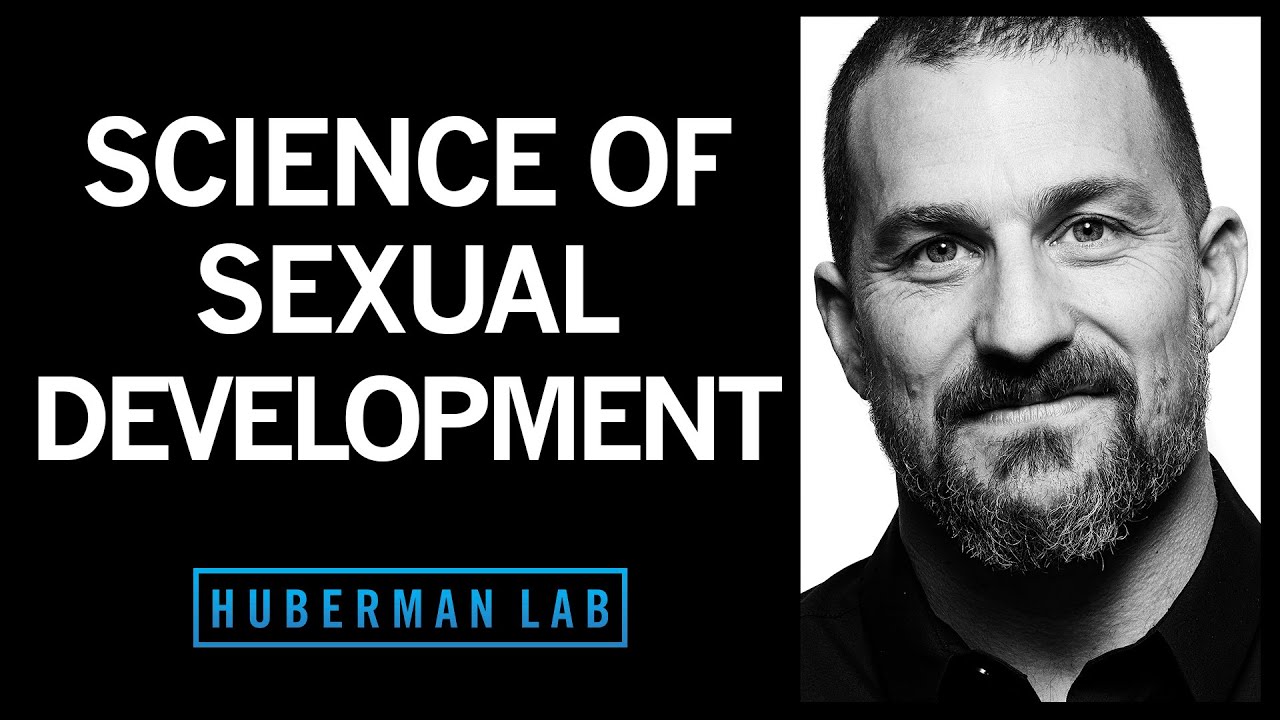
Andrew Huberman: Professor of neurobiology and ophthalmology at Stanford School of Medicine and host of the Huberman Lab podcast, who began his graduate work in neuroendocrinology.
What this episode covers
In this solo episode, Andrew Huberman walks through the biology of sexual differentiation, tracing how chromosomal sex becomes gonadal, hormonal, and morphological sex. He explains the surprising roles of specific androgens and enzymes, including that dihydrotestosterone (not testosterone) builds the penis and that estrogen aromatized from testosterone is what actually masculinizes the male brain. He covers environmental disruptors of hormones such as the herbicide atrazine, evening primrose oil, cannabis, alcohol, and cell phone radiation, and their links to declining sperm counts. He closes with research on prenatal androgen exposure as a biological correlate of sexual preference, drawing on finger-length ratios, otoacoustic emissions, and brain structure studies.
Recommended on this episode
Mood Meter app
Yale University researchers
“I mentioned the Mood Meter app. The Mood Meter app was developed by um people out at Yale University who study the biology and psychology of emotions. It's a really wonderful app.”— Andrew Huberman
Also referenced (named, not recommended)
Behavioral Endocrinology
Randy Nelson and Lance Kriegsfeld
“There's a book by um Randy Nelson and and Lance Kriegfield, ex- true experts in the field.”— Andrew Huberman
Pine pollen
“things like pine pollen look very much like testosterone structurally. They are more or less are testosterone. Their bioavailability in humans isn't as clear.”— Andrew Huberman
Creatine
“there's a particular sports supplement that a lot of people use called creatine. Creatine now, there's a lot of research showing that creatine can bring more more water into the muscle.”— Andrew Huberman
Big reveals from this episode
- The masculinization of the brain is not accomplished by testosterone but by estrogen, which is converted from testosterone by the enzyme aromatase.
- It is dihydrotestosterone, not testosterone, that builds the external penis in the fetus, via the enzyme 5-alpha reductase.
- Children with a 5-alpha reductase mutation are raised as girls then 'grow a penis' at puberty, a phenomenon called guevedoces ('penis at 12').
- Cannabis increases aromatase activity, raising estrogen and explaining higher rates of gynecomastia in male pot smokers.
- There appear to be real effects of cell phone-emitted waves on gonadal development and human hormone profiles, something Huberman never expected to discuss.
- A male's probability of self-reporting as homosexual increases with each older brother, possibly an epigenomic 'record' in the mother.
- Finger length (D2:D4) ratios reflect prenatal androgen exposure and statistically correlate with sexual preference, replicated six times.
Worth remembering
- The placenta itself is an endocrine organ, and a mother's adrenal gland can produce testosterone affecting the fetus.
- Average human sperm density dropped from 113 million per milliliter in 1940 to 66 million by 1990 in the US and Western Europe.
- UC Berkeley's Tyrone Hayes found atrazine causes severe testicular malformations, with 10 to 92% of male frogs at some US sites affected.
- Skin contact with women using estrogenic evening primrose oil caused accelerated breast bud development in young boys.
- DHT promotes facial hair on the face but hair loss on the scalp, and baldness/beard patterns reflect the genetic distribution of DHT receptors.
- Creatine appears to promote 5-alpha reductase activity, which may explain anecdotal reports of hair loss.
- Female spotted hyenas have giant clitorises and give birth through them due to high androstenedione, the same compound abused in 1990s baseball.
- A mole species in Tilden Park can transdifferentiate its testes into ovaries to balance the population's sex ratio.
- Otoacoustic emissions (sounds the ears actually make) differ by sex and are more common in self-reported lesbians.
- Some plants evolved estrogenic compounds as 'plant-to-animal warfare,' lowering sperm counts to clamp animal populations.