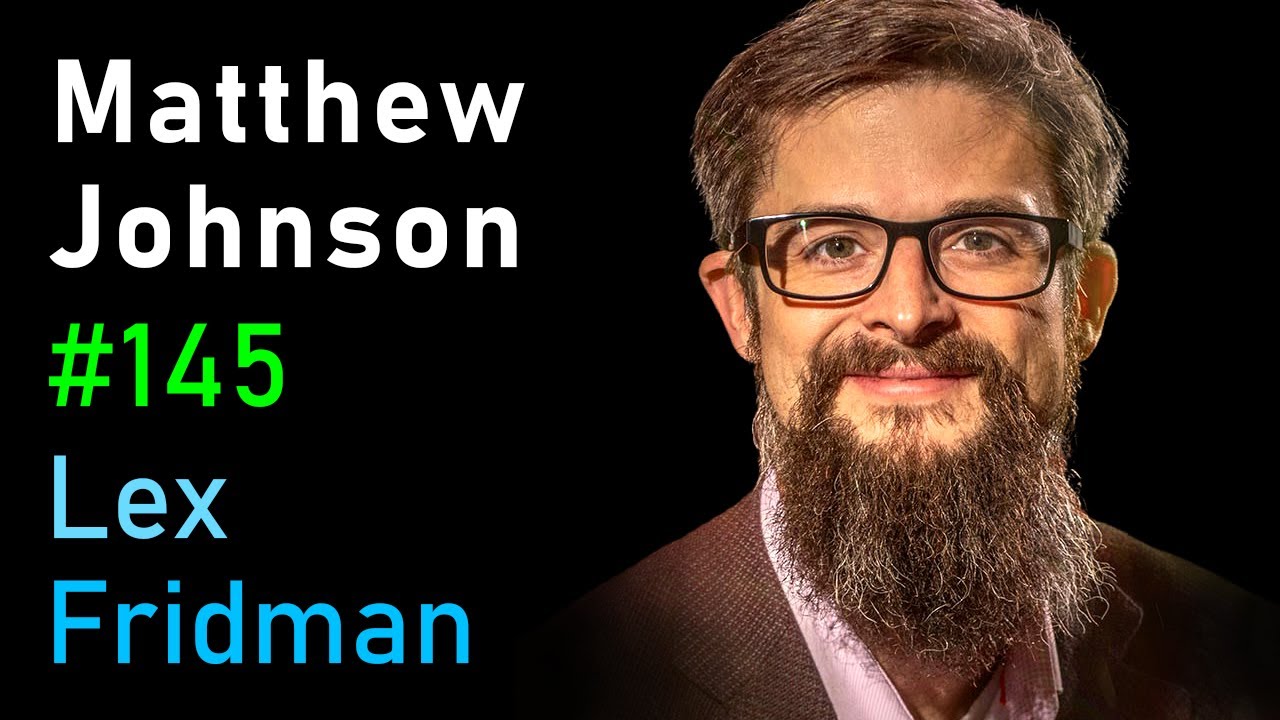
Matthew Johnson: A professor of psychiatry and behavioral sciences at Johns Hopkins and one of the world's leading scientists studying psychedelics, addiction, and behavioral economics.
What this episode covers
Matthew Johnson gives a wide-ranging tour of psychedelics, distinguishing classic compounds (psilocybin, LSD, DMT, mescaline) from MDMA and others by their pharmacology, safety, and subjective effects. He explains his behavioral-economics lens on addiction (demand curves, elasticity, delay discounting) and applies it to drug policy, sexual decision-making, and his celebrated psilocybin smoking-cessation trials. He details how high-dose sessions are run at Hopkins with the mantra 'trust, let go, be open.' The conversation widens into consciousness, panpsychism, Elon Musk's first-principles thinking, Neuralink, aliens, and ultimately death and the meaning of life.
Recommended on this episode
Kary Mullis autobiography (Dancing Naked in the Mind Field)
Kary Mullis
“he says he wouldn't have won the nobel prize from it said he wouldn't have come up with that had he not had psychedelic experiences um you know now he's an interesting character people should read his autobiography”— guest
The Varieties of Psychedelic Experience
Robert Masters and Jean Houston
“masters in houston that wrote a really good book the varieties of psychedelic experience kind of which is a play on varieties of religious experience by william james”— guest
Also referenced (named, not recommended)
The Varieties of Religious Experience
William James
“the varieties of psychedelic experience kind of which is a play on varieties of religious experience by william james”— guest
Deep Work
Cal Newport
“cal newport if you know who that is um he wrote a book called deep work he's a computer science professor and he's currently working on a book about email”— guest
The Doors of Perception
Aldous Huxley
“like huxley aldous huxley with his mescaline experience and doors of procession like there's an is-ness there”— guest
Narcan (naloxone)
Emergent BioSolutions
“naloxone which is an antagonist it goes into the receptor it's called narcan that's the trade name but it's what they revive people on an opioid overdose”— guest
Big reveals from this episode
- Classic psychedelics like LSD and psilocybin are 'freakishly safe' physiologically, with no known lethal overdose dose for most people.
- A defining feature of classic psychedelics is that they are not addictive, which is unheard of among recreational drugs.
- Johnson names nicotine/tobacco as the most deadly drug by far, killing four times more Americans than alcohol; all illegal drugs combined are a barely-visible blip by comparison.
- His psilocybin smoking-cessation pilot produced 80% biologically-confirmed abstinence at six months, far exceeding standard treatments.
- The follow-up randomized trial shows 59% smoke-free at one year on psilocybin versus 27% on the nicotine patch.
- Johnson would bet on panpsychism over emergence to explain consciousness, on Occam's-razor grounds.
- He concedes, as a 'radical empiricist,' that it is not impossible DMT entities could be extraterrestrial or interdimensional life forms.
- He openly admits he is afraid of dying and ponders mortality on a daily basis, partly shaped by his cancer-patient research.
Worth remembering
- A smoked DMT 'breakthrough' typically takes about three big inhalations and comes on 'like a freight train.'
- DMT users report autonomous entities, often described as elves or Terence McKenna's 'self-dribbling basketballs.'
- Nobel laureate Kary Mullis credited psychedelic experiences with helping him invent PCR.
- Behavioral economics applies microeconomic tools like demand curves and elasticity to drug consumption and addiction.
- Humans and animals discount future rewards hyperbolically, not exponentially, producing preference reversals that drive addiction.
- Heavily taxing cigarettes can backfire for fully addicted poor smokers, effectively taxing their existence and worsening their lives.
- Narcan (naloxone) revives opioid overdoses almost 100% of the time when a medical professional is present.
- Alcohol increases risky sex via disinhibition, while stimulants like cocaine do it by boosting the rewarding value of sex itself.
- The high research dose of psilocybin is 30-40mg, roughly equivalent to five dried grams of mushrooms, a 'heroic dose.'
- A study comparing Tibetan singing bowls and gongs to classical music found a slight (non-significant) edge for the novel playlist.