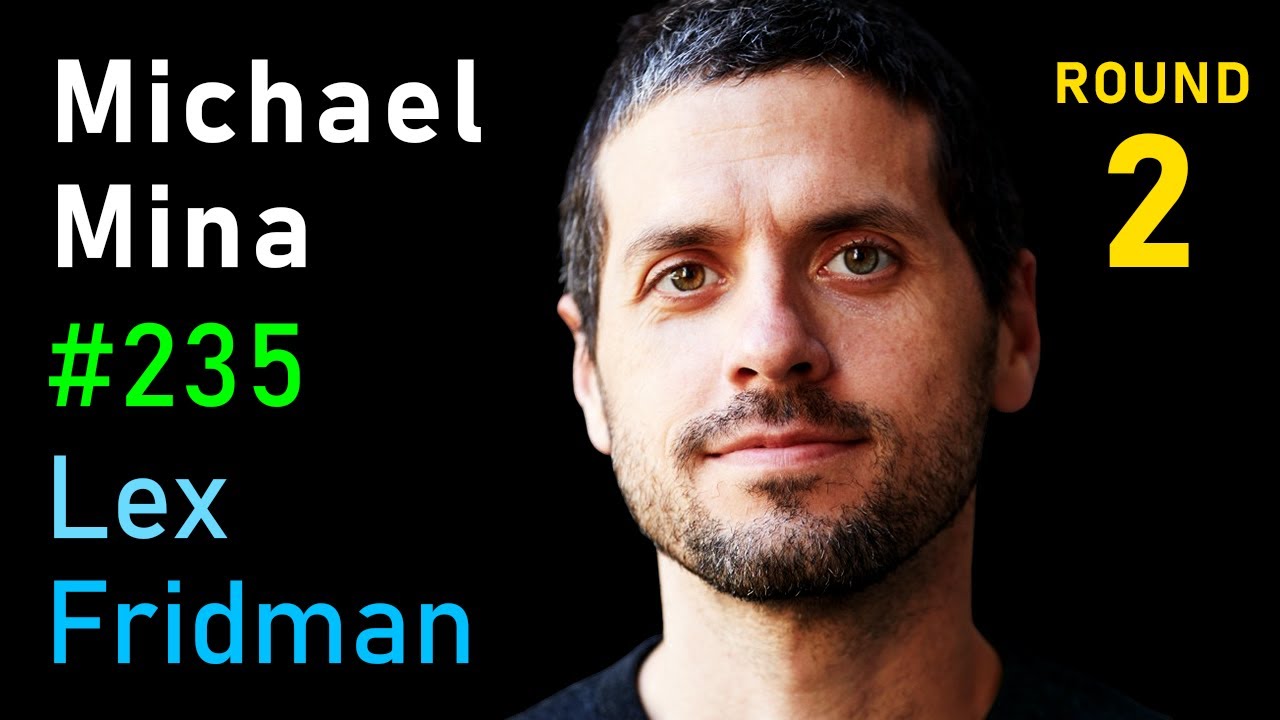
Michael Mina: A Harvard professor researching infectious disease and immunology, and a leading public advocate for rapid at-home antigen testing as a public health tool. A former Buddhist monk, this is his second appearance on the podcast.
What this episode covers
Michael Mina makes the case that rapid at-home antigen tests are the most powerful, doable solution to COVID because they answer the only question that matters for transmission: am I infectious right now? He explains why the FDA's evaluation of these tests as medical devices against the PCR gold standard misclassifies and blocks them, and how a single presidential executive action redefining them as public health tools could unlock hundreds of millions of cheap tests. He critiques the Biden 'vaccinate or test' plan, vaccine over-promising on transmission, and the politicization of testing. The conversation closes with Mina reflecting on his time as a Buddhist monk, meditation, detachment, minimalism, and the future of civilization.
Recommended on this episode
This Week in Virology (TWiV)
Vincent Racaniello
“i was on twitter this week in virology um shout out to two of those guys are awesome they are awesome i love i love twiv”— Michael Mina
Also referenced (named, not recommended)
eMed
eMed
“scanned a qr code on the box and emed which is a service that provides test verification popped up with a proctor right on my phone”— Michael Mina
Big reveals from this episode
- Rapid tests are ~95-100% sensitive at catching super-spreaders even though a misleading 'average' sensitivity vs PCR makes them look only ~40% sensitive.
- People are typically infectious for only 3-7 days but can stay PCR-positive for 30-70 days, so PCR can wrongly force isolation long after contagiousness ends.
- Mina argues one line of presidential executive action designating tests as 'public health tools' could legally bypass the FDA bottleneck.
- Pooled PCR testing of millions of schoolkids gets no FDA oversight, while a single-sample rapid test for the same purpose requires authorization.
- Vaccines were authorized on stopping disease, not transmission, which most trials never even measured as a metric.
- Mina says he is 'sort of serious' about wanting Elon Musk and Tesla engineers to mass-produce rapid tests cheaply.
- He calls 'vaccinate or test' confusing and wrong; it should be 'vaccinate AND test' because vaccinated people still transmit.
- Mina reveals he was a Buddhist monk who stopped meditating after living in a refugee camp following the 2004 Indian Ocean tsunami.
Worth remembering
- The virus can grow from zero to a billion copies in a day, so rapid tests don't need extreme sensitivity to catch the infectious window.
- A rapid test can cost roughly 50 cents to manufacture; in Germany's competitive market they sell for around 80 cents.
- Germany has authorized 60-70 different high-quality rapid test companies, while the US has very few.
- Tests are classified as medical devices because the CMS rule says any test that alters a single person's behavior is a medical device.
- The UK created a fast public-health screening pathway and deployed ranked rapid tests in weeks, not years.
- Mina frames quarantine and shutdowns as fundamentally information problems, not biological ones.
- The Biden plan's 280 million tests amounts to less than one test per person per year in the US.
- Mina predicts that by late 2022 or early 2023 COVID will likely be seen as not particularly dangerous for most people as immunity builds.
- Mina is pessimistic about the 'American experiment,' suggesting the US may become another power that rose and collapsed.